
Rafi Ahammed
Research Scholar
Dr B R Ambedkar National Institute of Technology, Jalandhar, Punjab, India
Email Id – textileandapparelinsights@gmail.com
Introduction
Weaving technology stands as one of humanity’s oldest and most enduring innovations, transforming simple fibers into complex textile structures that serve countless applications. From ancient handlooms to modern computerized systems, weaving has continuously evolved to meet the changing demands of society. The fundamental principle remains unchanged: the interlacement of warp and weft yarns to create fabric. However, the technology enabling this process has undergone revolutionary transformations, particularly in recent years.
Today’s textile industry witnesses an unprecedented convergence of traditional weaving craftsmanship with cutting-edge technologies such as artificial intelligence, Internet of Things (IoT), robotics, and advanced materials science. This digital transformation, often termed Industry 4.0, is reshaping every aspect of weaving operations, from design and production to quality control and supply chain management. The global textile machinery market, valued at USD 52.39 billion in 2024, is projected to reach USD 83.49 billion by 2032, reflecting a compound annual growth rate of 6.1%, driven primarily by automation and technological innovation.
Modern weaving technology addresses critical challenges including productivity enhancement, quality consistency, sustainability, and customization demands. Recent advancements encompass shuttleless weaving systems operating at unprecedented speeds, electronic Jacquard mechanisms enabling intricate pattern creation, three-dimensional weaving for composite applications, and smart textiles incorporating electronic functionality. This article explores the evolution of weaving technology, examines fundamental principles, reviews recent technological advancements, and discusses future directions in this dynamic field.
Historical Evolution of Weaving Technology
The history of weaving technology represents a fascinating journey from simple manual devices to sophisticated automated systems. Archaeological evidence suggests that primitive looms existed around 5000 BCE, consisting of basic wooden frames with fixed warp threads. These early innovations enabled humans to create textiles for clothing, shelter, and various practical applications.
The development of vertical looms around 3000 BCE marked a significant advancement, allowing weavers to work in upright positions and improving both efficiency and ergonomics. The introduction of treadle mechanisms during the early Iron Age revolutionized the process by enabling foot-operated control of warp threads, facilitating faster production cycles and more intricate patterns. Medieval innovations brought the drawloom, which allowed precise control of individual warp threads, enabling the creation of complex decorative fabrics that became highly prized during the Renaissance.
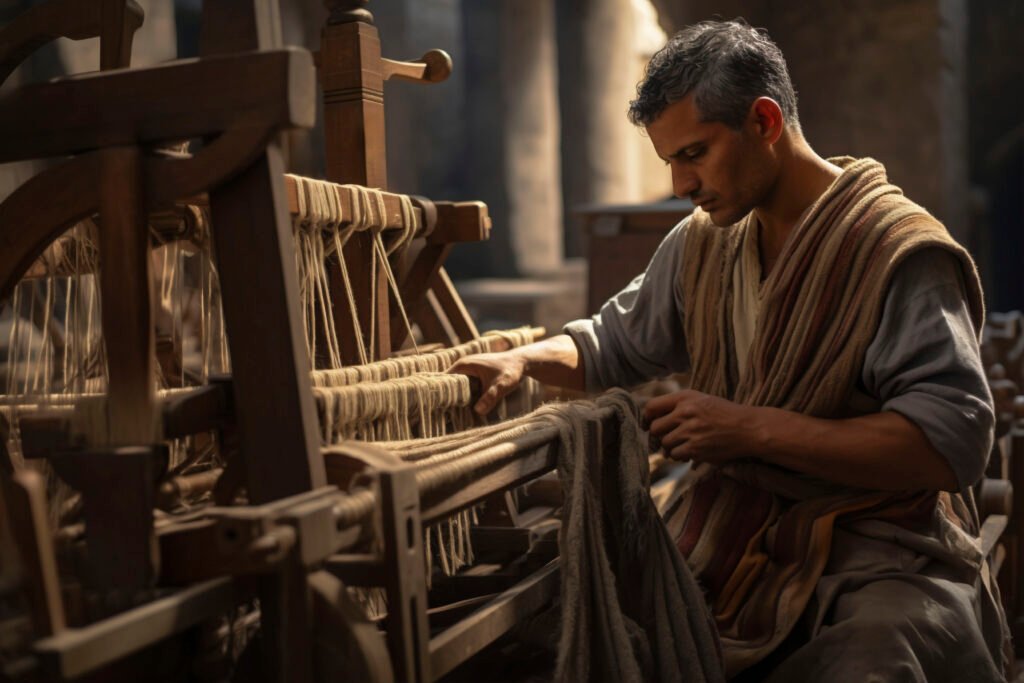
The Industrial Revolution of the 18th and 19th centuries catalyzed the most dramatic transformation in weaving history. John Kay’s invention of the flying shuttle in 1733 doubled weaving speed and reduced labor requirements. Edmund Cartwright’s power loom, patented in 1785, automated the weaving process using water or steam power, dramatically increasing productivity. However, the most revolutionary development came in 1801 with Joseph Marie Jacquard’s programmable loom, which used punched cards to control thread patterns automatically. This innovation not only transformed textile production but also influenced the development of computer programming, establishing a direct link between textile technology and information technology.
The 20th century brought further mechanization with the development of high-speed shuttleless looms, electronic controls, and computerized systems. These innovations laid the foundation for today’s Industry 4.0-enabled weaving operations, where digital technologies seamlessly integrate with traditional textile manufacturing processes.
Recent Advancements in Weaving Technology
The past decade has witnessed remarkable innovations in weaving technology, driven by demands for higher productivity, better quality, greater flexibility, and environmental sustainability. These advancements span mechanical systems, electronic controls, materials integration, and process optimization.
Shuttleless Weaving Systems: Enhanced Speed and Efficiency
Modern shuttleless looms represent the pinnacle of mechanical weaving efficiency. Recent developments have focused on increasing operational speeds while maintaining fabric quality. Air-jet looms have achieved remarkable performance improvements through optimized nozzle designs and sophisticated weft insertion controls. The pitch-shortened nozzle configuration increases operational speed by approximately 10 percent compared to previous models while reducing compressed air consumption through adaptive weft control systems.
Rapier weaving technology has evolved to offer unprecedented versatility, particularly for complex pattern fabrics and technical textiles. Contemporary rapier looms feature electronic weft selection systems enabling rapid pattern changes, pre-programmed variable speed control for different fabric sections, and advanced selvage formation technologies. These machines excel in weaving multi-color, hybrid, and specialty fabrics that demand precise yarn handling and pattern accuracy.
Recent innovations in weft insertion technology include real-time monitoring systems that continuously track yarn tension, insertion timing, and defect occurrence. These systems automatically adjust machine parameters to maintain optimal performance, significantly reducing stop marks and fabric defects. Integration of high-definition sensors enables evaluation of critical aspects such as thread tension, weave uniformity, and defect detection in real-time.
Electronic Jacquard Systems: Revolutionizing Pattern Complexity
The electronic Jacquard loom represents one of the most significant technological leaps in contemporary weaving. Modern electronic Jacquard systems have evolved far beyond their mechanical predecessors, offering designers unprecedented creative freedom and manufacturers substantial operational benefits.
Contemporary electronic Jacquard machines utilize computerized control systems to manipulate individual warp threads, enabling the creation of highly detailed and complex patterns. These systems can handle thousands of hooks, some installations feature over 128,000 micro-selector sensors, allowing for intricate designs that were previously impossible or prohibitively expensive. The Thread Controller 2 (TC2) digital Jacquard looms exemplify this technology, enabling artists to manipulate each thread individually using computerized controls, producing detailed, realistic images directly from digital files.
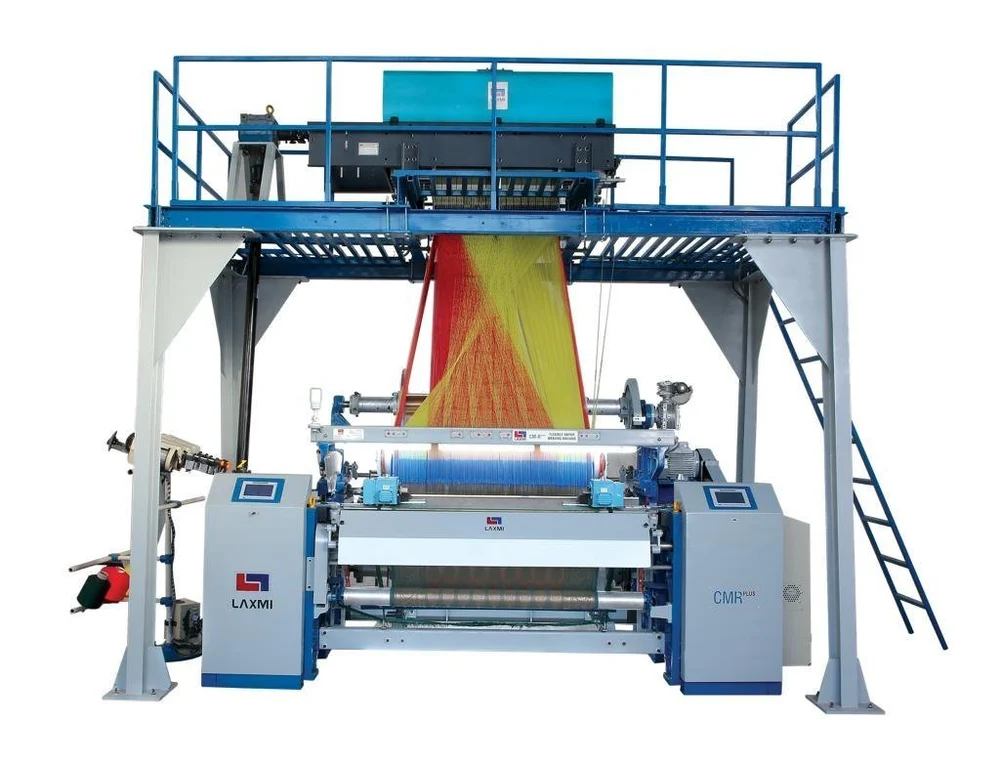
Electronic Jacquard technology delivers multiple advantages: increased productivity through automated pattern creation, reduced labor costs from minimal manual intervention, superior pattern capabilities handling complex designs with precision, and intuitive touchscreen controls simplifying operation. Pattern data storage capacity has expanded dramatically, modern systems accommodate up to 19,980,000 picks including repeat functions for dobby looms and 1,980,000 picks for cam/crank shedding looms. This expanded capacity enables virtually unlimited design possibilities and rapid pattern changes without mechanical modifications.
The integration of CAD/CAM systems with electronic Jacquard looms has transformed the design-to-production workflow. Designers can create patterns using standard software like Photoshop, send designs directly to the loom for production, and visualize fabric appearance through sophisticated simulation before committing to physical sampling. This digital workflow dramatically reduces development time, eliminates sample waste, and accelerates response to market demands.
Three-Dimensional Weaving Technology
Three-dimensional (3D) weaving technology represents a groundbreaking advancement with profound implications for composite materials and high-performance applications. Unlike traditional two-dimensional weaving that produces flat fabrics, 3D weaving creates textile structures with fibers oriented in three directions: length, width, and thickness.
The fundamental innovation of 3D weaving involves through-thickness reinforcement using z-binder yarns that interlace through multiple fabric layers. This structural configuration provides exceptional delamination resistance, improved out-of-plane mechanical properties, and enhanced impact performance compared to laminated composites. Research demonstrates that 3D woven composites exhibit excellent overall strength and impact resistance due to thick reinforcing z-binder yarns maintaining structural integrity under stress.
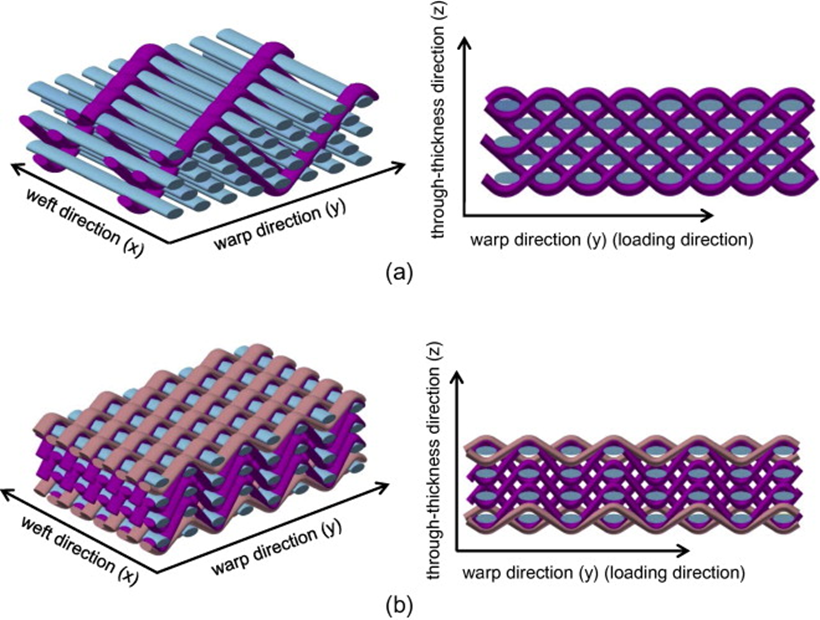
Modern 3D weaving employs modified interlacement systems designed for effective, continuous, and rapid manufacturing of various complex structures. Advanced computerized control systems precisely manipulate yarn paths to create seamless three-dimensional preforms with non-uniform heights, including boxes, bowls, pyramids, and other complex geometries. The ability to weave near-net-shape preforms eliminates extensive cutting and joining operations, significantly reducing manufacturing time and costs while improving structural performance.
Applications of 3D woven composites span multiple high-performance sectors. In aerospace, these materials serve in thermal protection systems for spacecraft, engine components for aircraft, and structural elements requiring exceptional strength-to-weight ratios. The aerospace industry particularly values 3D weaving’s ability to create lightweight components with high structural integrity and resistance to extreme temperatures. Automotive manufacturers increasingly adopt 3D woven composites for lightweighting initiatives, replacing metal components with carbon fiber structures that maintain strength while reducing vehicle weight. Additional applications include sporting equipment, wind turbine blades, and marine structures.
Smart Textiles and E-Textiles Integration
Smart textiles, also known as electronic textiles or e-textiles, represent a revolutionary convergence of traditional textile manufacturing with modern electronics and sensor technologies. This emerging field integrates electronic components such as sensors, actuators, energy sources, and microcontrollers directly into woven fabrics, creating textiles with computational and sensing capabilities.
Recent breakthroughs in smart textile weaving include several remarkable innovations. Researchers at Washington State University developed electrically conductive cotton-like fibers combining the flexibility of cotton with the conductivity of polyaniline polymer, enabling wearable sensor patches for hazardous exposure detection and health monitoring. MIT’s FibeRobo represents a programmable fiber that changes shape in response to temperature, compatible with existing weaving looms and industrial knitting machines, enabling adaptive performance wear and responsive garments. The National University of Singapore created spider-inspired fibers through phase separation-enabled ambient spinning, producing strong, stretchable, and electrically conductive fibers at room temperature.
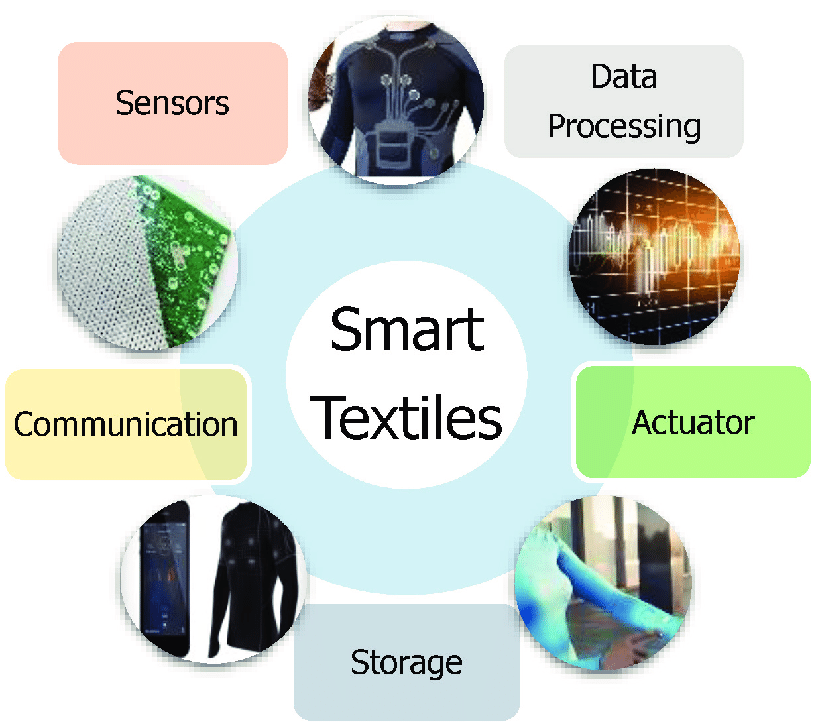
Weaving technology plays a crucial role in e-textile manufacturing by enabling the integration of conductive yarns, sensor fibers, and electronic components directly into fabric structures. Research demonstrates that weaving can incorporate electrically conductive yarn into fabrics to create “Wearable Motherboards” connecting multiple body sensors to signal acquisition electronics. Coaxial fiber-shaped tribo-sensors fabricated with silver yarn and polytetrafluoroethylene yarn can be integrated into textiles through conventional weaving processes, creating self-powered sensors for activity monitoring.
Smart textiles find applications across diverse sectors. In healthcare, woven e-textiles monitor vital signs, track patient movement, and detect health anomalies. Military and protective clothing incorporates sensors for environmental monitoring and threat detection. Sports and fitness applications include performance tracking, biometric monitoring, and adaptive compression garments. Consumer applications range from heated clothing to interactive fashion incorporating LEDs and touch-sensitive controls.
Industry 4.0 and Digital Transformation in Weaving
The Fourth Industrial Revolution, characterized by cyber-physical systems, Internet of Things, and data-driven intelligence, is fundamentally transforming weaving operations. Industry 4.0 technologies enable unprecedented levels of automation, optimization, and connectivity throughout the weaving process.

IoT-Enabled Smart Manufacturing
Internet of Things integration connects weaving machines, sensors, and control systems into cohesive networks that collect, analyze, and act upon real-time data. Modern weaving machines incorporate numerous sensors monitoring temperature, vibration, tension, speed, and operational parameters. These sensors continuously transmit data to centralized monitoring systems, providing operators with comprehensive visibility into machine performance and production status.
IoT-enabled predictive maintenance represents one of the most impactful Industry 4.0 applications in weaving. Traditional reactive maintenance waits for equipment failure before intervention, causing costly unplanned downtime. Predictive systems analyze sensor data using machine learning algorithms to identify anomalous patterns indicating impending failures. By predicting maintenance needs before breakdowns occur, manufacturers schedule interventions during planned downtime, minimize disruptions, reduce repair costs, and extend equipment life. Case studies demonstrate that predictive maintenance implementations achieve 19 percent reliability improvement through increased mean time between failures and uptime.
Digital Twin Technology
Digital twins, virtual replicas of physical assets, processes, or systems, represent a cutting-edge application of Industry 4.0 principles in textile manufacturing. These digital models synchronize with their physical counterparts in real-time, enabling simulation, prediction, and optimization without disrupting actual production.
In weaving applications, digital twins serve multiple functions. Machine-level twins replicate individual looms, tracking mechanical condition, energy consumption, and performance parameters. Process twins model entire weaving operations, simulating material flow, quality outcomes, and resource utilization under various scenarios. Product twins create virtual fabric prototypes, enabling design testing and property prediction before physical sampling.
Leading textile manufacturers have implemented digital twin systems with measurable benefits. Rieter’s digital twin ecosystem for spinning operations demonstrates potential to reduce commissioning time by 30 percent and optimize energy usage per kilogram of yarn. Indian manufacturer Welspun uses digital twin simulations for dyeing operations, achieving consistent color yield and reducing chemical usage by 12 percent. Vietnam’s TNG Investment & Trading reported a 9 percent output increase through better line coordination enabled by digital twins.
Artificial Intelligence and Data Analytics
Artificial intelligence applications in weaving encompass quality control, process optimization, production planning, and defect prediction. Machine vision systems powered by AI algorithms inspect fabrics during production, detecting defects with precision exceeding human capability. These systems identify thread breaks, tension irregularities, pattern errors, and contamination in real-time, triggering automatic corrections or alerts.
AI-driven production planning optimizes weaving schedules based on multiple variables including machine availability, yarn inventory, delivery deadlines, and quality requirements. Machine learning algorithms analyze historical production data to identify patterns, predict bottlenecks, and recommend optimal parameter settings for different fabric types. This data-driven approach enhances decision-making, reduces trial-and-error experimentation, and improves first-time-right production rates.
Blockchain for Supply Chain Traceability
Blockchain technology addresses transparency and traceability challenges in textile supply chains by creating immutable, decentralized records of transactions and material flows. Each production stage, from fiber sourcing through weaving to finished goods, is recorded on the blockchain with unique identifiers, timestamps, and relevant data.
For woven textiles, blockchain enables verification of material origins, production methods, labor conditions, and sustainability certifications. Consumers can scan QR codes on garments to access complete product histories, including fiber sources, weaving facilities, chemical treatments, and transportation routes. This transparency builds trust, prevents counterfeiting, and supports ethical and sustainable sourcing claims.
Several platforms facilitate blockchain implementation in textiles. Aware embeds microscopic tracers in textiles trackable through blockchain-recorded audit trails. Provenance helps brands track product journeys from raw materials to final garments, offering consumers clear insights into origins and production methods. The TRICK project builds blockchain infrastructure supporting supply chain traceability to overcome counterfeiting and greenwashing issues.
Future Research Directions
Several promising research areas will shape weaving technology’s future. Hybrid weaving techniques combining different fiber types within single preforms enable tailored material properties for specific applications. Advanced sensor integration and miniaturization will expand smart textile capabilities, potentially incorporating energy harvesting, wireless communication, and sophisticated computing within woven structures. Automation expansion through robotics will address labor-intensive tasks in textile handling, quality inspection, and post-weaving finishing.
Sustainability innovations will continue driving technological development. Bio-based materials, closed-loop manufacturing systems, and carbon-neutral production methods represent critical research frontiers. Digital transformation will deepen with increased artificial intelligence sophistication, expanded digital twin applications, and enhanced blockchain integration ensuring transparency and traceability throughout supply chains.
Conclusion
The most recent advancements in weaving technology, ranging from digitalized Jacquard and 3D weaving for composites, to IoT-enabled smart manufacturing, sustainability-driven innovations, and the rise of e-textiles, position weaving at the forefront of industrial transformation. As digitalization, automation, and sustainability priorities converge, the weaving sector will continue evolving, presenting new opportunities for technical innovation and market expansion in fashion, healthcare, aerospace, and beyond.
References
Gandhi, K. L. (2019). Woven textiles: Principles, technologies and applications (2nd ed.). Woodhead Publishing (Elsevier).
Drews, J., McQuillan, H., & Mosse, A. (2023, September). Methods for designing woven textile-forms: Examples from a pedagogical textile design workshop. In Proceedings of the Textile Intersections Conference 2023 (pp. 1–8). London, UK. https://doi.org/10.21606/TI-2023/113
Yang, H. J., Kim, D., Kang, K. M., & Yu, W. R. (2024). Manufacturing seamless three-dimensional woven preforms with complex shapes based on a new weaving technology. Heliyon, 10(1), Article e24121. https://doi.org/10.1016/j.heliyon.2024.e24121
Nuss, D., Mersch, J., et al. (2024). Spherically curved woven fabrics: Geometrical calculation methods and weave pattern development. Textile Research Journal, 94(7–8), 1174–1186. https://doi.org/10.1177/00405175231216645
Shi, Y., Taylor, L. W., Kulessa, A., Cheung, V., & Sayem, A. S. M. (2024). Re-engineer apparel manufacturing processes with 3D weaving technology for efficient single-step garment production. iScience, 27(8), 110315. https://doi.org/10.1016/j.isci.2024.110315
Zhang, X., Wang, J., Xing, Y., & Li, C. (2019). Woven wearable electronic textiles as self-powered intelligent tribo-sensors for activity monitoring. Global Challenges, 3(12), 1900070. https://doi.org/10.1002/gch2.201900070
Fortune Business Insights. (2024). Textile machinery market size: Global industry report, 2024–2032. https://www.fortunebusinessinsights.com/
Global Market Insights. (2024). Textile machinery market size and growth opportunity, 2025–2034. https://www.gminsights.com/
Indian Textile Journal. (2021). Weaving technologies today. https://www.indiantextilejournal.com/
Textile World. (2025). Innovation in weaving lights the road to Industry 4.0. https://www.textileworld.com/
Read More
- Wyzenbeek vs Martindale: Fabric Test Comparison
- Differences Between SAM and SMV in Garment Manufacturing
- Exploring the Future: Smart Textiles and Their Influence on Technological Innovation
- China’s Cotton Topping Robot: Revolutionizing Xinjiang’s Fields at 10x Speed
- Smart Garments for Elderly Health Monitoring and Active Living
- Call for Submissions: Share Your Expertise in Textile and Apparel
- Redesigning the Breath of Life: A Next-Gen N95 That Filters More Than Air
- History and Development of Suture
- Different Blending methods with their advantages and disadvantages
- The methods of measuring the thermal insulation and water vapor permeability of fabrics
- Six Sigma: A Comprehensive Guide to Process Excellence
- Transforming Textiles with Nanotechnology: Applications and Advances
- The Science and Innovation Behind Waterproof Breathable Fabrics
- Classification of Protective Textiles
Yo, anyone tried 393bet9? I gave it a spin last night. The customer service was actually pretty responsive when I had a question. Not bad! Check it out: 393bet9
Quick shout-out to yaawin! Seems like a good resource for mobile game news. Will be keeping an eye on it for updates! Stay tuned for game news on yaawin!
[url=https://aviator-game-owner.com/]aviator game online[/url] offers an exciting experience and the opportunity to win real money directly from your device.
The Aviator game has gained significant popularity among online gambling enthusiasts.
Discover a world of entertainment with [url=https://777bet-live.com/]777bet download[/url], where unforgettable gaming moments and big wins await you!
To begin with, one of the main attractions of 777bet is its extensive array of betting choices.
В казино [url=https://aviator-1win-app.ru]1вин игра авиатор[/url] игроки могут наслаждаться захватывающими взлетами и множеством возможностей для выигрыша.
Обсуждение с другими игроками помогает лучше понять механики игры.
Spend a luxurious evening with [url=https://goodday4play-casino.com/]goodday 4play casino[/url]!
The idea of good day 4 play promotes a lifestyle filled with fun and enjoyment.
[url=https://play-boy888.com/]playboy888[/url]
Many users around the world find Playboy888 to be an intriguing online destination.
http://git.bplt.ru:3000/carinaburchett/6267kraken-darknet/wiki/%D0%9A%D0%A0%D0%90%D0%9A%D0%95%D0%9D%3A-%D0%BD%D0%B5-%D0%BD%D0%B0%D0%B4%D0%BE-%D1%81%D0%BF%D0%B5%D1%86%D1%8D%D1%84%D1%84%D0%B5%D0%BA%D1%82%D0%BE%D0%B2%2C-%D0%BA%D0%BE%D0%B3%D0%B4%D0%B0-%D0%B5%D1%81%D1%82%D1%8C-%D0%B2%D0%BA%D1%83%D1%81
http://git.bplt.ru:3000/carinaburchett/6267kraken-darknet/wiki/%D0%9A%D1%80%D0%B0%D0%BA%D0%B5%D0%BD-%D0%BC%D0%B0%D1%80%D0%BA%D0%B5%D1%82%D0%BF%D0%BB%D0%B5%D0%B9%D1%81%3A-%D0%BD%D0%B8%D0%BA%D1%82%D0%BE-%D0%BD%D0%B5-%D0%BE%D1%81%D1%82%D0%B0%D0%BD%D0%B5%D1%82%D1%81%D1%8F-%D0%B1%D0%B5%D0%B7-%D0%BB%D1%83%D0%BA%D0%B0
http://git.bplt.ru:3000/carinaburchett/6267kraken-darknet/wiki/%D0%A2%D0%BE%D0%BB%D1%8C%D0%BA%D0%BE-%D0%B2-%D0%BA%D1%80%D0%B0%D0%BA%D0%B5%D0%BD-%D0%BC%D0%B0%D1%80%D0%BA%D0%B5%D1%82%3A-%D0%B8%D0%BD%D1%82%D0%B5%D1%80%D1%84%D0%B5%D0%B9%D1%81-%D0%B2-%D1%82%D0%B2%D0%BE%D1%8E-%D1%81%D1%82%D0%BE%D1%80%D0%BE%D0%BD%D1%83
http://git.bplt.ru:3000/carinaburchett/6267kraken-darknet/wiki/%D0%A2%D0%BE%D0%BB%D1%8C%D0%BA%D0%BE-%D0%B7%D0%B4%D0%B5%D1%81%D1%8C-%E2%80%94-KRAKEN-onion-%D0%B8-%D1%82%D0%BE%D1%87%D0%BA%D0%B0-%D0%BD%D0%B0-%D0%BA%D0%B0%D1%80%D1%82%D0%B5-%D0%B2%D0%BA%D1%83%D1%81%D0%B0
http://git.bplt.ru:3000/carinaburchett/6267kraken-darknet/wiki/%D0%A3%D0%BB%D0%B8%D1%86%D0%B0-%E2%80%94-%D1%82%D0%B2%D0%BE%D0%B9-%D1%8D%D0%BA%D1%80%D0%B0%D0%BD.-KRAKEN-onion-%E2%80%94-%D1%82%D0%B2%D0%BE%D0%B9-%D0%BA%D0%BE%D1%81%D1%82%D1%8E%D0%BC
http://git.bplt.ru:3000/carinaburchett/6267kraken-darknet/wiki/%D0%BA%D1%80%D0%B0%D0%BA%D0%B5%D0%BD-%D0%BC%D0%B0%D1%80%D0%BA%D0%B5%D1%82%3A-%D0%B2%D1%8B%D0%B1%D0%BE%D1%80%2C-%D0%B2-%D0%BA%D0%BE%D1%82%D0%BE%D1%80%D1%8B%D0%B9-%D0%BB%D0%B5%D0%B3%D0%BA%D0%BE-%D0%BF%D0%BE%D0%B2%D0%B5%D1%80%D0%B8%D1%82%D1%8C
http://git.bplt.ru:3000/carinaburchett/6267kraken-darknet/wiki/KRAKEN%3A-%D1%81%D1%82%D0%B8%D0%BB%D1%8C%2C-%D0%BA%D0%B0%D0%BA-%D1%83-%D1%82%D0%BE%D0%B3%D0%BE-%D1%87%D0%B5%D0%BB%D0%B0-%D1%81-%D0%B2%D0%B0%D0%B9%D0%B1%D0%BE%D0%BC
http://git.bplt.ru:3000/carltonvansick
http://git.bplt.ru:3000/cassiexop35945
http://git.bplt.ru:3000/concettabeall
This tool provides organized access to movie recommendations.Each selection includes high-quality posters, engaging trailers, and convenient streaming links,and the collections are structured around diverse topics.The platform is actively maintained with latest releases.This approach organizes content for effortless discovery.You can access this content easily. [LINK]
[url=https://kiss918-lama.com/]918kiss lama apk download[/url] offers a convenient way to download the gambling application.
Mobile gaming has emerged as a convenient entertainment option for many.
[url=https://v-powerapk.com/]vpower apk download[/url] our website makes it easy and fast to access all the features of this great game.
This design makes it easy for users to navigate and access the available functions.
Choosing the right foundation shade can be tough, especially when considering the variety of skin tones like pale olive, olive-colored skin, or citrus undertones. A great start is to identify your skin’s undertone—whether it’s cold, hot, or neutral—and then find foundations that harmonize with those shades. If you’re struggling to find your foundation shade, options like online color palette analysis or gratis color analysis tests can be very handy for pairing both makeup and clothing colors to your own style.
Also, grasping your seasonal color palette (springtime, cool, deep, bold) can make a significant difference in how your makeup and clothing look on you. You can investigate quizzes for “what would be my color season” or “color palette quiz” online to get tailored recommendations. For a web-based try-on experience, hair color simulators and foundation shade finders offer a secure way to play around before buying. Look at this resource for more in-depth guidance [url=https://color-analysis-ai.org]deep autumn color palette[/url] .
Immerse yourself in the world of exciting betting with [url=https://aviator-bonus-game.com/]online aviator game[/url] and try your luck!
This game combines elements of chance and strategy, making it unique among other gambling options.
Plai in [url=https://original-aviator-game.com/]how to play aviator game[/url] and experience the adrenaline rush with every bet!
Players can share their experiences, strategies, and even celebrate their wins together.
Погрузитесь в захватывающий мир игры [url=https://aviator-1win-slot.ru/]авиатор 1win[/url] и испытайте удачу прямо сейчас!
1win aviator — увлекательная игра, которая завоевала любовь пользователей по всему миру.
Try downloading the new version of 918kiss using [url=https://kiss918lama.com/]918kiss[/url] and enjoy the exciting gaming process!
Players can enjoy a range of games, including classic slot machines and unique card games.
Visit our website [url=https://goodday-4play.com/]goodday 4play casino[/url]and discover exciting games!
At the heart of this idea is the goal of strengthening relationships through playful interactions.
[url=https://play8oy2-apk.com/]playboy888[/url]
Playboy888 stands out as a fascinating website that has sparked curiosity among a wide range of users.
Immerse yourself in a captivating world[url=https://astronaut-game-aviator.com/]inverter game[/url]and try your luck at flying your own plane!
This involvement turns the game into an avenue for social interaction rather than merely a contest.
Играйте в [url=https://aviator-1win-apk.ru/]aviator win[/url] и испытайте удачу в увлекательном мире авиационных приключений!
Важно осознавать, что игра может быть связана с определенными рисками.
[url=byfurniture.ry]Дизайнерская мебель премиум класса[/url] — это воплощение изысканного стиля и безукоризненного качества.
Основное преимущество дизайнерской мебели заключается в ее эксклюзивности. Многие дизайнеры предлагают кастомизированные решения, которые подчеркивают индивидуальность владельца.
Immerse yourself in a fascinating world [url=https://new-aviator-game.com/]airplane game money[/url] and experience your passion right now!
A standout aspect of the aviator game is its unique multiplier system.
[url=https://v-powerapp.com/]vpower apk download[/url]
These updates help in fixing bugs and improving the overall user experience.
билеты пхукет краби Аэропорт Краби Онлайн Табло: смотрите на сайте.
Если вы ищете надежный автосервис для вашей Тойота в Москве, вам повезло. Специалисты готовы осуществлять ремонт и обслуживание ваших автомобилей.
Если вам нужен качественный и надежный автосервис Тойота в Москве, мы предлагаем широкий спектр услуг для вашего автомобиля.
Для Тойота необходим высокий уровень квалификации. Мастера сервиса постоянно повышают свою квалификацию для качественного обслуживания.
В нашем сервисе используются современные технологии и оборудование. Наличие современного оборудования существенно упрощает процесс диагностики.
Вы получите качественное и профессиональное обслуживание вашего автомобиля. Наши клиенты всегда остаются довольны результатом работ.
Как не попасться на уловки мошенников https://ne-popadis.org/
Hiya, I’m really glad I have found this information. Today bloggers publish only about gossips and net and this is really irritating. A good site with exciting content, this is what I need. Thanks for keeping this web site, I will be visiting it. Do you do newsletters? Can’t find it.
Rhom Bho Property The Title Balcony is a modern beachfront condominium in Phuket, located on the coast in the Nai Yang area.
The Title Balcony Nai Yang stands out as a sleek, modern beachfront condominium in Phuket, positioned right by the shoreline in the Nai Yang area . This condominium offers breathtaking views of the Andaman Sea provides stunning vistas of the Andaman Sea . The location is perfect for those who want to wake up to the sound of waves ideal for individuals who wish to awaken to the sound of waves . The Title Balcony Nai Yang is designed to offer a luxurious lifestyle designed to provide a lavish lifestyle .
The character of Jo March has inspired generations of women to write, create, and live on their own terms. Her fierce intellect and loyalty make her one of fiction’s greatest protagonists. To fully appreciate her journey, one must read the novel in its entirety. A Little Women PDF is a fantastic resource for readers who want to explore every line of dialogue and description. Digital formats preserve the integrity of the text while offering modern convenience. It is the perfect way to engage with a story that has shaped the landscape of young adult literature. https://littlewomenpdf.site/ Little Women Epub Download
Tham gia 888slot là một quá trình đơn giản, nhanh chóng và bảo mật. Với giao diện được thiết kế tối ưu cho người dùng Việt Nam, việc bắt đầu trải nghiệm nhà cái đổi thưởng trở nên dễ dàng ngay cả với những người mới làm quen với thế giới giải trí trực tuyến. TONY01-29H
koko slot 888 được cấp giấy phép hoạt động bởi các cơ quan quản lý cá cược quốc tế, như PAGCOR (Philippine Amusement and Gaming Corporation) và Curacao eGaming. Điều này không chỉ chứng tỏ rằng koko slot 888 tuân thủ các quy định nghiêm ngặt về cá cược mà còn đảm bảo rằng người chơi sẽ được bảo vệ quyền lợi hợp pháp. TONY01-29H
Благодаря тому, что ботулинотерапия является широко распространенным и эффективным методом в косметологии, многие люди могут добиться значительных улучшений в своем внешнем виде без необходимости хирургического вмешательства.
это эффективный способ омолодить кожу и получить более свежий вид. Она включает в себя введение небольшого количества ботулинического токсина в определенные области лица, что способствует уменьшению видимости мелких морщин и обновлению кожи. Эта процедура используется во многих клиниках и салонах красоты для достижения желаемого результата.
Ботулинотерапия применяется для лечения различных косметических проблем, включая морщины, складки и другие признаки старения . Она может быть выполнена в течение короткого времени, обычно от 15 до 30 минут . После процедуры результаты ботулинотерапии становятся видны в течение нескольких дней после процедуры.
**Раздел 2: Преимущества ботулинотерапии**
Ботулинотерапия предлагает ряд преимуществ, включая эффективность и безопасность . Она помогает пациентам чувствовать себя более уверенно и комфортно в своей коже . Ботулинотерапия подходит для людей, стремящихся улучшить свой внешний вид без значительных изменений в своей жизни.
Ботулинотерапия применяется не только для косметических целей, но и для лечения различных медицинских состояний . Она является перспективным методом лечения в различных областях медицины. Ботулинотерапия должна выполняться только квалифицированными специалистами, чтобы обеспечить безопасность и эффективность процедуры .
**Раздел 3: Противопоказания и возможные осложнения**
Ботулинотерапия, как и любая медицинская процедура, должна быть выполнена только квалифицированными специалистами, имеющими опыт работы с ботулиническим токсином. Противопоказания для ботулинотерапии могут включать аллергические реакции на компоненты ботулинического токсина .
Возможные осложнения ботулинотерапии обычно являются краткосрочными и проходят самостоятельно в течение нескольких дней. В редких случаях может возникнуть более серьезное осложнение, такое как инфекция или асимметрия лица . Ботулинотерапия должна быть выполнена в соответствии с современными медицинскими стандартами и протоколами, чтобы минимизировать риск осложнений .
**Раздел 4: Заключение и перспективы**
Ботулинотерапия является эффективным и безопасным методом омоложения кожи и коррекции косметических проблем . Она получила широкое распространение в последние годы благодаря своей эффективности и безопасности .
Ботулинотерапия должна выполняться только квалифицированными специалистами, чтобы обеспечить безопасность и эффективность процедуры . Перспективы ботулинотерапии могут включать разработку новых методов и техник введения ботулинического токсина. Ботулинотерапия должна быть тщательно оценена и выполнена только квалифицированными специалистами, чтобы обеспечить лучший возможный результат.
[url=http://vzhelezke.ru/forum/topic_3725/1/]фреоновое масло[/url]