Rudra Narayan Saha & Rafi Ahammed
Research Scholar
Dr B R Ambedkar National Institute of Technology, Jalandhar, Punjab, India
Email Id – rudenarayansaha37469@gmail.com, rafiahammedgcetts@gmail.com
Introduction
The textile and apparel industry relies on standardised testing to evaluate the quality, durability, comfort, safety, and performance of fibres, yarns, fabrics, and garments. ASTM International provides numerous standardised test methods used by textile laboratories, manufacturers, researchers, and quality-control professionals.
The uploaded Textile Testing Standard reference contains a practical collection of ASTM methods covering tensile strength, tear strength, bursting strength, air permeability, pilling, abrasion, GSM, thickness, fibre properties, yarn properties, knitted fabrics, flammability, water absorption, and water vapour transmission.
This guide explains the major ASTM standards used in textile and apparel testing and their practical importance.
What Are ASTM Standards in Textile?
ASTM standards are consensus-based documents that establish standardized methods, specifications, terminology, and guidance for testing and evaluating materials and products.
In textile testing, ASTM methods are used to determine properties such as:
- Tensile strength and elongation
- Tear and bursting strength
- Air permeability
- Fabric GSM and thickness
- Abrasion and pilling resistance
- Moisture regain
- Yarn twist and linear density
- Fibre diameter and identification
- Stretch and recovery
- Flammability
- Water vapour transmission
ASTM Committee D13 on Textiles develops standards covering textile fibres, yarns, fabrics, apparel, home textiles, terminology, smart textiles, and related areas.
Why Are ASTM Standards Important?
Testing the same fabric in different laboratories can produce different results if specimen preparation, testing conditions, equipment, or procedures vary.
ASTM standards help improve:
- Consistency of testing
- Repeatability of measurements
- Comparability of results
- Quality control
- Research reliability
- Communication between manufacturers and buyers
A test method should also be distinguished from a product specification. A test method generally explains how a property is measured, whereas a specification may define the required performance level.
Major Categories of ASTM Textile Testing
ASTM textile testing can broadly be organised into:
- Yarn testing
- Fabric strength testing
- Tear and bursting testing
- Surface performance testing
- Physical property testing
- Structural and dimensional testing
- Fibre analysis
- Knitted fabric testing
1. Yarn Testing
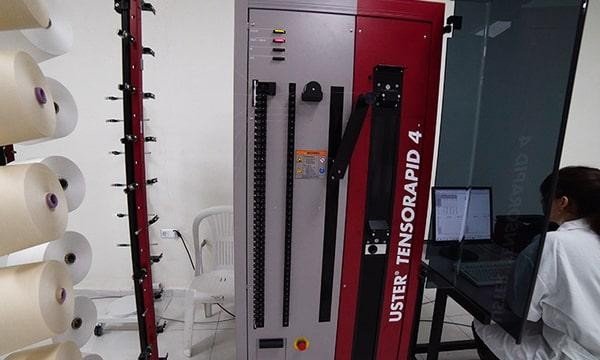
Yarn testing evaluates the mechanical, structural, and physical characteristics of yarns before they are converted into woven or knitted fabrics. Important properties include tensile strength, elongation, tenacity, linear density, twist, unevenness, shrinkage, and hairiness.
The uploaded reference includes methods such as ASTM D2256 for yarn tensile properties, ASTM D1907 for yarn linear density, ASTM D1422 and D1423 for yarn twist, ASTM D1425 for yarn/fibre unevenness, ASTM D2259 for yarn shrinkage, and ASTM D5647 for yarn hairiness.
These properties influence yarn quality, processing performance, fabric appearance, strength, and ultimately the performance of the finished textile.
2. Fabric Strength Testing
Fabric strength testing determines how a textile responds to tensile loading before failure. It is particularly important for evaluating the durability and mechanical performance of woven fabrics.
The uploaded reference identifies ASTM D5035 for breaking force and elongation using the strip method and ASTM D5034 for the grab method. It also lists ASTM D6775 for the breaking strength and elongation of braids.
These tests are useful in quality control and product development where fabric strength and elongation are important performance requirements.
3. Tear and Bursting Testing
Tear and bursting tests evaluate a fabric’s resistance to localised or multidirectional mechanical forces.
Important methods listed in the reference include:
- ASTM D1424 – Elmendorf tear strength using a falling-pendulum method
- ASTM D2261 – Tongue tear strength
- ASTM D3786 – Bursting strength using a diaphragm bursting method
Tear resistance is important for garments and technical fabrics exposed to localised damage, while bursting strength is particularly useful where the material experiences forces in multiple directions.
4. Surface Performance Testing
Surface performance testing evaluates how textile materials respond to rubbing, repeated use, snagging, and surface deformation.
The uploaded reference includes:
- ASTM D3512 – Pilling resistance
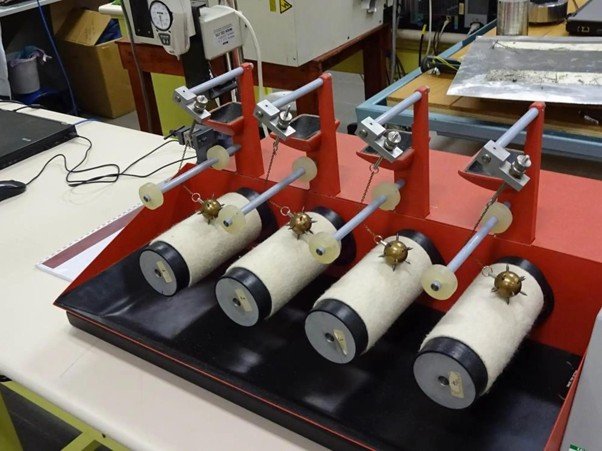
- ASTM D4966 – Abrasion resistance using the Martindale method
- ASTM D3939 – Snagging resistance using the Mace apparatus
These tests are particularly relevant to apparel because surface deterioration can affect both a garment’s appearance and service life.
5. Physical Property Testing
Physical property testing determines fundamental characteristics that influence the weight, thickness, stiffness, comfort, and general behaviour of textile fabrics.
The reference includes:
- ASTM D3776 – Fabric mass per unit area (GSM)
- ASTM D1777 – Fabric thickness
- ASTM D1388 – Bending stiffness
- ASTM D5732 – Fabric drape
- ASTM D737 – Air permeability
These properties are important in fabric selection and can influence apparel comfort, appearance, handling, and end-use performance.
6. Structural and Dimensional Testing
Structural and dimensional testing examines the construction and physical dimensions of textile materials. These properties are essential because textile construction directly influences appearance, strength, permeability, stretch, and dimensional characteristics.
The uploaded reference includes:
- ASTM D3775 – Ends and picks count in woven fabrics
- ASTM D3774 – Fabric width
- ASTM D8007 – Wale and course count in knitted fabrics
- ASTM D2594 – Stretch properties of knitted fabrics
Such measurements help manufacturers maintain consistency during fabric production and ensure that the finished material meets the intended construction and dimensional requirements.
7. Fibre Analysis
Fibre analysis focuses on identifying and characterising the fibres used in textile materials. Fibre properties have a major influence on yarn formation, fabric characteristics, comfort, and end-use performance.
The uploaded reference lists:
- ASTM D1577 – Fiber linear density
- ASTM D6500 – Fiber diameter
- ASTM D2495 – Moisture regain
- ASTM D276 – Fiber identification
- ASTM D629 – Quantitative fiber composition
- ASTM D2257 – Extractable matter
These methods are useful for raw material characterisation, quality control, fibre blend verification, and textile research.
8. Knitted Fabric Testing
Knitted fabrics have a looped structure that gives them different mechanical and dimensional behaviour compared with woven fabrics. Therefore, specific testing methods are required to characterise their construction and performance.
The uploaded reference identifies ASTM D8007 for wale and course count and ASTM D2594 for stretch and recovery properties of knitted fabrics.
These properties are particularly important for knitted apparel such as sportswear, T-shirts, leggings, underwear, and other stretch garments.
Additional Apparel and Functional Performance Testing
Some ASTM methods in the uploaded reference do not fit neatly into only one of the eight categories above but are important for apparel and functional textile evaluation. These include:
- ASTM D1230 – Flammability of apparel textiles
- ASTM D4772 – Water absorption of terry fabric
- ASTM E96 – Water vapour transmission
These methods address important aspects of safety, moisture management, and functional performance in textile and apparel applications.
Together, these categories cover a broad range of textile evaluation, from fibre and yarn characterisation to fabric construction, mechanical strength, surface durability, physical properties, knitted-fabric performance, and apparel functionality. Understanding these categories makes it easier for students, researchers, textile engineers, and laboratory professionals to identify the appropriate ASTM method for a particular testing requirement.
Complete ASTM Standards Table for Textile and Apparel
| ASTM Standard | Testing Property | Typical Result |
| ASTM D2256 | Yarn tensile properties | Breaking force, elongation, tenacity |
| ASTM D5035 | Fabric breaking force – Strip | Breaking force, elongation |
| ASTM D5034 | Fabric breaking force – Grab | Breaking force, elongation |
| ASTM D6775 | Braids breaking strength | Breaking force, elongation |
| ASTM D1424 | Elmendorf tear strength | Tear force |
| ASTM D2261 | Tongue tear strength | Tear force |
| ASTM D3786 | Bursting strength | Bursting pressure |
| ASTM D737 | Air permeability | cm³/cm²/s |
| ASTM D3512 | Pilling resistance | Grade 1–5 |
| ASTM D3775 | Ends and picks count | EPI, PPI |
| ASTM D1577 | Fibre linear density | Tex, dtex, denier |
| ASTM D1907 | Yarn linear density | Tex, denier, Ne |
| ASTM D3776 | Fabric GSM | g/m² |
| ASTM D1388 | Bending stiffness | Bending length, flexural rigidity |
| ASTM D4966 | Abrasion resistance | Mass loss/appearance |
| ASTM D1230 | Flammability | Flame spread time |
| ASTM D4772 | Terry fabric water absorption | Water absorption |
| ASTM D6500 | Fiber diameter | µm |
| ASTM D1422 | Yarn twist – Untwist/retwist | Turns/m or TPI |
| ASTM D1423 | Yarn twist – Direct counting | Turns/m or TPI |
| ASTM D2495 | Moisture regain | % |
| ASTM D5732 | Fabric drape | Handle value |
| ASTM D1777 | Fabric thickness | mm |
| ASTM D3774 | Fabric width | mm/cm/in |
| ASTM D8007 | Wale and course count | Wales/in, Courses/in |
| ASTM D2594 | Knitted fabric stretch | Stretch and recovery % |
| ASTM D1425 | Yarn/fibre unevenness | CV%, U% |
| ASTM D2257 | Extractable matter | % |
| ASTM D2259 | Yarn shrinkage | % |
| ASTM D276 | Fiber identification | Qualitative identification |
| ASTM D629 | Quantitative fibre composition | % by mass |
| ASTM D5647 | Yarn hairiness | Hairiness index |
| ASTM D3939 | Snagging resistance | Rating |
| ASTM E96 | Water vapour transmission | Weight change method |
How ASTM Standards Are Used in a Textile Laboratory
A typical laboratory workflow is:
Sample selection → Specimen preparation → Conditioning → ASTM test selection → Instrument testing → Data recording → Result interpretation → Test report
The exact procedure depends on the selected ASTM method.
ASTM Standards in Apparel Quality Control
ASTM methods can support quality control throughout the textile supply chain.
Fibre: diameter, identification, moisture regain, linear density, and composition.
Yarn: strength, twist, unevenness, hairiness, shrinkage, and linear density.
Fabric: GSM, thickness, tensile strength, tear strength, bursting strength, abrasion, pilling, air permeability, and construction.
Garment: stretch, recovery, flammability, drape, snagging, water absorption, and moisture-related performance.
Advantages and Limitations
Advantages
- Standardised testing procedures
- Improved laboratory consistency
- Better comparison of materials
- Support for quality assurance
- Useful for academic research
- Broad coverage of textile properties
Limitations
ASTM test methods do not automatically define acceptable product performance. Results can also depend on specimen preparation, conditioning, equipment, calibration, and laboratory practice.
ASTM standards may also be revised or replaced. Therefore, laboratories should verify the latest applicable edition before formal or accredited testing.
The uploaded document should be regarded as a quick-reference educational guide, not a substitute for the complete official ASTM standard.
Practical Takeaways
ASTM standards provide an important foundation for textile and apparel testing. They help students understand textile properties, researchers describe experimental procedures, laboratories perform standardised measurements, and manufacturers evaluate product quality.
The most important areas include:
- Yarn strength and twist
- Fabric tensile and tear strength
- GSM and thickness
- Air permeability
- Pilling and abrasion
- Fibre identification and composition
- Knitted fabric stretch
- Moisture regain
- Flammability
- Water vapour transmission
Understanding which ASTM method is used to evaluate a particular textile property is, therefore, an essential skill for textile students, researchers, engineers, and laboratory professionals.
Conclusion
ASTM standards provide a structured and consistent foundation for testing textile and apparel materials. From fibre and yarn characterisation to fabric strength, comfort, durability, safety, and moisture-related performance, ASTM test methods help researchers, manufacturers, and testing laboratories obtain reliable and comparable results. The ASTM methods summarised in this article also demonstrate how different textile properties require specific testing procedures rather than a single universal method. For formal laboratory testing, certification, or regulatory applications, the current ASTM edition should always be consulted, as standards can be revised or replaced.
References
- ASTM International. Committee D13 on Textiles. ASTM International, official information on textile standards and standards development.
- ASTM International. ASTM Textile Standards and Test Methods. ASTM International, official standards database.
- Textile Testing Standard. Uploaded reference document containing ASTM textile testing methods, specimen sizes, testing procedures, and measurement units.
- ASTM D2256. Standard Test Method for Tensile Properties of Yarns by the Single-Strand Method.
- ASTM D5034. Standard Test Method for Breaking Strength and Elongation of Textile Fabrics (Grab Test).
- ASTM D5035. Standard Test Method for Breaking Force and Elongation of Textile Fabrics (Strip Method).
- ASTM D737. Standard Test Method for Air Permeability of Textile Fabrics.
- ASTM D3776. Standard Test Methods for Mass Per Unit Area (Weight) of Fabric.
- ASTM D4966. Standard Test Method for Abrasion Resistance of Textile Fabrics (Martindale Abrasion Tester Method).
- ASTM D3512. Standard Test Method for Pilling Resistance and Other Related Surface Changes of Textile Fabrics: Random Tumble Pilling Tester.
- ASTM D1777. Standard Test Method for Thickness of Textile Materials.
- ASTM D1424. Standard Test Method for Tearing Strength of Fabrics by Falling-Pendulum (Elmendorf-Type) Apparatus.
- ASTM D1230. Standard Test Method for Flammability of Apparel Textiles.
- ASTM E96. Standard Test Methods for Water Vapour Transmission of Materials.
Frequently Asked Questions
1. What is ASTM in textile testing?
ASTM International develops standardised methods and other consensus documents used for evaluating textile materials and products.
2. Which ASTM standard is used for fabric tensile strength?
ASTM D5035 is listed for the strip method, while ASTM D5034 is listed for the grab method.
3. Which ASTM standard is used for GSM?
ASTM D3776 is listed for determining fabric mass per unit area.
4. Which ASTM standard measures air permeability?
ASTM D737.
5. Which ASTM standard is used for pilling?
ASTM D3512.
6. Which ASTM standard measures fabric thickness?
ASTM D1777.
7. Which ASTM method is used for fiber identification?
ASTM D276.
8. Are ASTM standards mandatory?
ASTM standards are generally voluntary consensus standards, although they may become required through regulations, contracts, specifications, or certification requirements.
Read More
- Spun Spinning: Process Sequence and Material Flow
- From Waste to Wearables: The Evolution of Acoustic Textiles
- ntroduction to Weaving and Shuttle Looms
- Handloom to High Street: Why Traditional Textiles Matter Today
- Lean Manufacturing Tools in the Textile & Apparel Industry
- CO₂ vs Water Dyeing: A Sustainable Comparison
- The Rise of Sustainable Textile Insulation Materials
- Innovations in Smart Textiles for Wearable Comfort
- Recent Advancements in Weaving Technology
- Wyzenbeek vs Martindale: Fabric Test Comparison
- Differences Between SAM and SMV in Garment Manufacturing
- Exploring the Future: Smart Textiles and Their Influence on Technological Innovation
- China’s Cotton Topping Robot: Revolutionizing Xinjiang’s Fields at 10x Speed
- Smart Garments for Elderly Health Monitoring and Active Living
CategoriesBlog
1 thought on “ASTM Standards in Textile and Apparel Sectors”